
Looking to transform your loft into a spacious, functional living area? Newcastle Roof Conversions offers expert dormer loft conversions in Newcastle, turning underutilised loft spaces into bright, comfortable bedrooms or living areas.
Perfect for terraced, semi-detached, and detached homes, our skilled specialists deliver reliable installations with high-quality construction and transparent pricing. Dormer conversions increase ceiling height and headroom, enhance natural light, and seamlessly integrate under Permitted Development rules where possible.
With our professional approach, we maximise your home’s potential, creating stylish, functional spaces that add significant value and comfort to your property.
GET YOUR FREE QUOTE HERE
Fill out the form below, and a team member will get back to you as soon as possible.
Dormer conversions excel in terraced houses by projecting outwards to reclaim lost space, providing standing room where steep roof pitches once limited usability, ideal for maisonette properties too. In semi-detached and detached houses, these additions create versatile loft bedrooms with dormer windows that flood rooms with natural light. Experts recommend assessing your property’s structure early to align with Permitted Development guidelines, avoiding unnecessary Planning Permission.
A Flat Roof Dormer or Shed Roof Dormer often suits Newcastle’s traditional homes, offering maximum headroom in the loft while blending with the roofline. Pairing with skylights amplifies daylight, making spaces feel airy and inviting. Professional teams ensure exterior cladding like slate tiles or rendering matches your home’s aesthetic seamlessly.
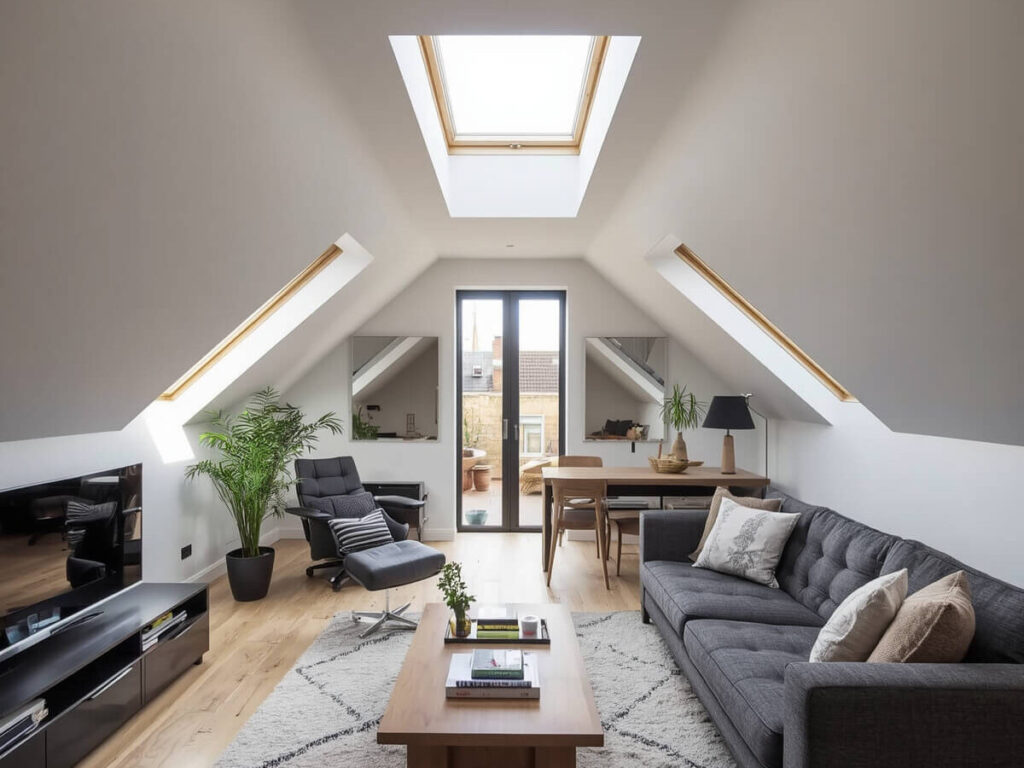
Consider a Rear Dormer for privacy in terraced settings, or a gable-fronted dormer for detached houses seeking bold character. These transformations boost functionality, turning attics into practical living quarters. Transparent discussions on cost-dormer factors help owners plan effectively from the outset.
Benefits for Terraced Houses
In terraced houses, dormer conversions unlock hidden potential by adding headroom to a loft where roofs slope sharply. A rear dormer extends seamlessly, complying with Permitted Development limits on projection and height. This creates full-height loft bedrooms ideal for growing families.
Window dormers and skylights invite abundant natural light, transforming dim attics into vibrant retreats. Choose flat roof dormer designs for cost efficiency and modern appeal. Exterior finishes like glass reinforced plastic or metal cladding ensure durability against Newcastle’s weather.
Practical advice includes measuring existing ceiling height to confirm gains post-conversion. These additions enhance privacy without altering street views. Owners gain valuable floor space without relocating.
Slate tiles or rendering cladding maintain period charm while modernising interiors. Such upgrades suit narrow plots perfectly. Consult specialists to navigate guidelines smoothly.
Enhancing Semi-Detached Homes
Semi-detached properties benefit immensely from shed roof dormer extensions, sloping gently to maximise ceiling height. This design fits the Permitted Development criteria, often avoiding full planning applications. Resulting loft bedrooms offer comfort and style for additional sleeping quarters.
Incorporate dormer windows alongside skylights for optimal natural light distribution. Metal cladding provides a sleek finish resistant to the elements. These conversions elevate home value through thoughtful space optimisation.
Experts suggest a Side Dormer or rear dormer to preserve front elevations. Ample headroom loft supports fitted wardrobes and en-suites. Balance aesthetics with functionality for enduring appeal.
Transparent cost dormer breakdowns aid budgeting. Tailored solutions respect shared boundaries. Transform underused lofts into cherished family havens effortlessly.
Ideal for Detached Houses
Detached houses shine with expansive Dog-House Dormer or gable fronted dormer options, creating dramatic headroom loft increases under Permitted Development rules. These bold projections suit larger roofs, yielding generous loft bedrooms. Natural light pours through oversized dormer windows.
Opt for a flat roof dormer for contemporary flair, clad in slate tiles or rendering cladding. Skylights enhance ventilation and views. Such transformations redefine luxury living in Newcastle’s suburbs.
Practical steps involve site surveys to verify structural support. Loft conversion expertise ensures seamless integration. Enjoy versatile spaces for offices or guest rooms.
Focus on durable exterior cladding like glass-reinforced plastic for low maintenance. These upgrades add prestige without compromise. Detached owners maximise independence fully.
Dormer Conversion Costs with Newcastle Roof Conversions
Newcastle Roof Conversions provides transparent cost dormer pricing for dormer loft conversion projects, ensuring homeowners receive clear quotes for popular options like flat roof dormer and rear dormer installations that deliver exceptional value through our loft conversion expertise.
Costs vary based on the dormer type and property style, such as terraced house, semi-detached, or detached house. A flat roof dormer often suits terraced properties by maximising headroom in the loft without extending too far from the roofline. Rear dormers provide seamless expansions for semi-detached homes, enhancing usable space efficiently.
Factors like ceiling height requirements, dormer windows, and exterior cladding choices influence the final expense. Homeowners benefit from our detailed breakdowns, covering materials such as slate tiles, rendering cladding, or metal cladding. This approach guarantees high-quality transformations at predictable costs.
Our commitment to affordability means every loft conversion prioritises durability and aesthetics. Whether adding a loft bedroom or improving natural light with skylights, we tailor quotes to fit budgets while upholding superior craftsmanship.
Flat Roof Dormer Costs
Flat roof dormers offer cost-effective headroom loft gains, ideal for terraced houses needing extra vertical space. These designs use a level roof surface, reducing material demands compared to sloped alternatives. Newcastle Roof Conversions provides precise quotes reflecting this efficiency.
Key expenses include structural reinforcements, dormer windows for natural light, and cladding options like glass-reinforced plastic or rendering cladding. Flat roofs support modern skylights, enhancing loft bedroom functionality without high costs. Our expertise ensures value through streamlined installations.
Property size and access influence pricing, particularly for semi-detached and Conservation Area setups. We focus on minimal disruption during construction, keeping overall costs manageable. Homeowners appreciate the balance of affordability and expanded living space.
Rear Dormer Costs
Rear dormers excel in maximising rear extension potential, perfect for detached houses or those with garden access. This type pushes outwards from the back roof slope, creating generous ceiling height and floor area. Transparent pricing from Newcastle Roof Conversions covers all aspects upfront.
Costs encompass shed roof dormer elements if angled, plus exterior finishes like slate tiles or metal cladding. Dormer windows flood the loft bedroom with natural light, justifying the investment. We optimise designs to control expenses while meeting headroom loft standards.
Factors such as planning permissions and site specifics affect the total. Our tailored quotes highlight savings from efficient material use. Rear dormers transform underused attics into versatile spaces affordably.
Other Dormer Types and Influencing Factors
Gable fronted dormers suit traditional aesthetics, mimicking the main roof pitch for harmony on detached houses. These require more intricate framing, impacting costs alongside choices like skylights or dormer windows. Newcastle Roof Conversions details these in every quote.
Shed roof dormers provide a sloped, budget-friendly alternative with good natural light. Exterior cladding decisions, from rendering cladding to glass reinforced plastic, add customisation without inflating prices unnecessarily. Property type remains a core factor.
- Assess ceiling height needs early to select the right dormer.
- Choose cladding like metal cladding for durability in exposed locations.
- Integrate skylights for enhanced loft bedroom appeal.
Our process ensures high-quality transformations at fair costs, adapting to terraced house constraints or semi-detached expansions.
Factors That Influence Dormer Conversion Pricing
Several key factors influence dormer pricing, including the required ceiling height and headroom loft enhancements, incorporation of dormer windows and skylights for natural light, and property type, such as terraced house or maisonette configurations. These elements determine the structural complexity and materials needed for a seamless dormer loft conversion. Newcastle Roof Conversions carefully assesses each to optimise budgets without compromising quality.
Achieving adequate ceiling height often requires raising rooflines or adding flat roof dormer or shed roof dormer structures, which directly impacts labour and material expenses. For instance, in a terraced house, limited access might necessitate specialised scaffolding, elevating costs. Yet, experts at Newcastle Roof Conversions select efficient designs like rear dormer extensions to maximise headroom loft space affordably.
Incorporating dormer windows or skylights boosts natural light for a functional loft bedroom, but custom sizing and glazing add to the bill. Terraced house setups demand discreet placements to preserve aesthetics, potentially increasing engineering fees. Newcastle Roof Conversions integrates cost-effective glass-reinforced plastic or metal cladding to balance light and expense.
- Ceiling height adjustments via gable-fronted dormer for semi-detached or detached house lofts.
- Skylights as budget alternatives to full dormer windows in compact terraced properties.
- Exterior cladding choices like slate tiles or rendering cladding to match existing roofs economically.
Property type further shapes pricing, with terraced houses facing restrictions on projections, unlike detached houses’ freedoms. Newcastle Roof Conversions tailors solutions, such as minimal flat roof dormer profiles, ensuring loft conversions remain viable for varied budgets, subject to Planning Permission if needed.
Types of Dormer Conversions Offered by Newcastle Roof Conversions
Newcastle Roof Conversions specialises in a range of dormer types, including Flat Roof Dormer, Shed Roof Dormer, gable fronted dormer, Rear Dormer, Window Dormer, Side Dormer, and Dog-House Dormer, each designed to maximise space and light in your loft conversion project.
These dormer loft conversions enhance headroom, loft, and ceiling height, transforming underused attics into functional loft bedrooms or home offices. Experts recommend selecting a dormer style that complements your home’s architecture, whether a terraced house or semi-detached.
Natural light floods in through dormer windows or skylights, while exterior cladding options like slate tiles or rendering cladding ensure seamless integration. Practical advice includes assessing your roof pitch early to match the dormer to your loft conversion goals.
For detached house owners, bolder designs like gable fronted work well, whereas rear dormers suit privacy needs in urban settings. Each type balances cost-dormer considerations with long-term value.
Flat Roof Dormer
The flat roof dormer features a level roofline, ideal for maximising internal ceiling height in loft conversions. This design suits terraced houses where vertical space is limited, providing ample headroom in the loft without altering the main roof slope significantly.
Its clean, modern aesthetic integrates well with glass reinforced plastic or metal cladding for durability. Natural light pours through large dormer windows, creating bright loft bedrooms.
Experts recommend this for semi-detached properties seeking cost-effective expansion. Pair it with skylights for even more illumination in your dormer loft conversion.
Shed Roof Dormer
A shed roof dormer slopes in a single direction, often matching the main roof’s fall for subtle integration. It excels in providing generous headroom loft, perfect for loft conversions in semi-detached or detached houses.
This type enhances natural light via expansive dormer windows and suits rear elevations. Use slate tiles or rendering cladding to blend with existing roofing.
Practical for terraced house owners, it boosts usable space efficiently. Consider it when aiming for a loft bedroom with optimal ceiling height.
Gable Fronted Dormer
The gable-fronted dormer mirrors a mini gable end, adding striking verticality to your loft conversion. It suits detached houses with steeper roofs, dramatically increasing the headroom, loft and ceiling height.
Traditional charm pairs with modern twists like metal cladding. Dormer windows here maximise natural light, ideal for airy loft bedrooms.
Its bold profile works on side elevations too. Balance aesthetics with cost-dormer factors for timeless appeal.
Rear Dormer
A rear dormer extends from the back of the property, prioritising privacy in dense neighbourhoods. Common in terraced houses, it delivers substantial floor space and headroom for loft conversions.
Flat or shed roof variants allow large dormer windows for natural light. Opt for exterior cladding like rendering to match neighbours seamlessly.
This discreet choice transforms attics into practical loft bedrooms. It minimises visual impact while maximising interior gains.
Window Dormer
The window dormer, or casement dormer, focuses on vertical windows within a compact projection. It suits bungalows or low-pitched roofs, enhancing light without major structural changes in loft conversions.
Ideal for modest headroom loft improvements, it integrates skylights effectively. Use slate tiles for a cohesive look on semi-detached homes.
Its simplicity keeps the cost of dormer low. Perfect for subtle natural light boosts in urban settings.
Side Dormer
A side dormer projects from the roof’s flank, unlocking side space in loft conversions. It benefits detached houses with wider profiles, offering flexible ceiling height and dormer windows.
Metal cladding or glass-reinforced plastic ensures weather resistance. This placement avoids rear access issues in terraced setups.
Experts favour it for unique layouts needing extra headroom in the loft. Combine with skylights for versatile loft bedroom designs.
Dog-House Dormer
The Dog-House Dormer combines gable front and shed roof elements, resembling a small house atop your roof. It provides exceptional headroom loft, suiting ambitious loft conversions in detached houses.
Prominent dormer windows flood spaces with natural light. Rendering cladding or slate tiles maintains architectural harmony.
This versatile style adapts to various roof pitches. It elevates terraced house attics into luxurious retreats efficiently.
Adding Value to Your Property with a Dormer Conversion
A professional Dormer Loft Conversion significantly adds value to your property by creating a functional Loft Bedroom with enhanced natural light, superior headroom, ideal for semi-detached and detached house owners looking to boost their home’s market appeal.
Transforming unused attic space into a loft bedroom appeals to buyers seeking extra living area without extending sideways. Dormer windows and skylights flood the room with natural light, making it versatile for use as a bedroom, office, or guest suite. This addition stands out in property listings for semi-detached and detached houses.
Improved ceiling height through designs like flat roof dormer or shed roof dormer eliminates cramped feelings common in standard lofts. Homeowners in terraced houses, semi-detached, or detached properties gain practical headroom in the loft for everyday comfort. Experts recommend these conversions to modernise older homes effectively.
Exterior finishes such as slate tiles, rendering cladding, Glass Reinforced Plastic, or metal cladding ensure seamless integration with existing roofs. A rear dormer or gable-fronted dormer enhances curb appeal while complying with local planning rules. Newcastle Roof Conversions specialises in these tailored solutions for maximum property uplift.
Creating a Functional Loft Bedroom
A dormer loft conversion turns awkward attic voids into spacious Loft Bedrooms suitable for families or remote workers, especially mindful of restrictions in a Conservation Area. Ample headroom loft allows for full-height wardrobes and comfortable standing, far beyond basic loft ladders. This creates an inviting retreat high above the main house.
Incorporate dormer windows alongside skylights to optimise natural light, reducing reliance on artificial sources. Semi-detached and detached house owners benefit most, as these properties often have sufficient roof pitch for rear dormer extensions. Practical advice includes positioning the bed to capture morning sunlight for a refreshing start.
Consider storage solutions built into eaves for efficiency. Flat roof dormer designs lower costs while maximising floor space. Newcastle Roof Conversions ensures the loft bedroom meets building regulations for long-term value.
Such conversions appeal to buyers valuing flexible living spaces. A well-executed dormer addition signals thoughtful investment in the property’s potential.
Optimising Natural Light
Natural light transforms dim lofts into bright, airy havens through strategic dormer windows and skylights. Shed roof, dormer, or gable fronted dormer placements allow sunlight to penetrate deeply, enhancing mood and usability. This feature proves especially valuable in semi-detached houses with north-facing roofs.
Pair large dormer windows with light-coloured interior schemes to amplify brightness. Rear dormer extensions on detached houses capture southern exposure effectively. Homeowners report loft bedrooms feeling more expansive and welcoming year-round.
Experts recommend glazing options that balance light intake with thermal efficiency. Avoid overcrowding with too many openings to maintain structural integrity. Newcastle Roof Conversions integrates these elements seamlessly during the Dormer Loft Conversion process.
Improving Headroom Loft
Headroom loft gains from dormer designs eliminate stooping in converted spaces, vital for daily comfort. Flat roof dormer provides vertical extension, achieving standard ceiling height in loft bedrooms. This upgrade suits terraced houses, semi-detached, and detached properties alike.
Shed roof dormer slopes gently to blend with existing lines while boosting usable height. Practical examples include full-height access to en-suite bathrooms or study nooks. Focus on central positioning for even distribution across the floor area.
Window dormers suit front elevations, adding character alongside functionality. Newcastle Roof Conversions assesses your roof structure to recommend the best approach. Enhanced headroom loft directly correlates with higher buyer interest.
Ideal for Semi-Detached and Detached Houses
Semi-detached and detached house owners find dormer conversions particularly rewarding due to the available roof expanse. Rear Dormer extensions avoid neighbour disputes while creating generous loft bedrooms. These properties accommodate a larger Flat Roof Dormer without compromising aesthetics.
Exterior cladding like metal cladding or slate tiles matches original materials, preserving neighbourhood harmony. Side Dormer considerations favour these homes, as groundwork remains minimal. Integrate skylights for optimal natural light in upper storeys.
Rendering cladding offers durable, low-maintenance finishes. Newcastle Roof Conversions tailors solutions for these house types, ensuring planning approval and value enhancement. Detached houses gain most from a gable-fronted dormer for a bold visual impact.
Planning Permission Requirements for Dormer Conversions
Understanding Planning Permission and Permitted Development rules is crucial for dormer conversions, especially for rear dormer projects in Ma Maisonette or Conservation Area properties, with Newcastle Roof Conversions guiding you through compliance.
Permitted Development allows certain dormer loft conversions without full planning approval if they meet strict size and location criteria. Rear dormers on terraced houses or semi-detached properties often qualify, provided they do not exceed specified projections from the original roofline. Always verify local council interpretations to avoid enforcement issues.
For Maisonettes, rules differ due to shared structures, often requiring formal Planning Permission even for modest flat roof dormers. Conservation Areas impose additional restrictions on exterior cladding, slate tiles, and dormer windows to preserve character. Consult early with authorities for seamless project approval.
Key factors include ceiling height, headroom loft requirements, and natural light via skylights or dormer windows. Rear dormer installations in detached houses may fall under Permitted Development more readily. Newcastle Roof Conversions assesses your property type to recommend the optimal path.
Permitted Development Rights for Rear Dormers
Rear dormers typically enjoy Permitted Development rights on terraced houses and semi-detached homes, bypassing full Planning Permission if they remain invisible from public streets. This suits Shed Roof Dormer or flat roof dormer designs that enhance the loft bedroom space without altering front elevations. Projections must align with national guidelines on height and volume.
Ensure the dormer does not exceed half the roof slope’s width and maintains adequate headroom in the loft. Use materials like matching slate tiles or rendering cladding for subtlety. Experts recommend pre-application advice from your local council to confirm eligibility.
For Maisonettes, shared access complicates Permitted Development, often necessitating neighbour consultations. In semi-detached setups, check party wall agreements alongside these rights. This approach minimises cost overruns from unexpected refusals.
Planning Permission in Conservation Areas
Conservation Areas demand Planning Permission for most dormer conversions, prioritising aesthetic harmony with Glass Reinforced Plastic, metal cladding, or traditional slate tiles. Gable fronted dormers face scrutiny for impacting historic skylines, while rear dormers require sympathetic designs. Submit detailed drawings showing natural light enhancements and exterior cladding matches.
Councils assess impacts on neighbouring properties’ light and privacy, especially in terraced house clusters. Flat roof dormers with minimal profiles often gain approval if they blend via rendering cladding. Early engagement with heritage officers streamlines the process.
Loft conversions here elevate property value through compliant loft bedrooms, but non-adherence risks demolition orders. Newcastle Roof Conversions navigates these nuances, ensuring your project respects local character while maximising usable space.
Special Rules for Maisonette Properties
Ma Maisonettes trigger Planning Permission requirements more frequently due to leasehold complexities and upper-floor access. Rear dormer extensions must not compromise structural integrity or communal areas, often needing freeholder consent alongside council approval. Opt for discreet flat roof dormers to improve headroom in the loft without disputes.
Dormer windows and skylights boost natural light, but projections demand precise measurements to stay within limits. Use durable metal cladding or glass-reinforced plastic for longevity in urban settings. Practical advice includes surveying shared walls early.
Semi-detached Maisonettes may leverage some Permitted Development for rear elements, yet full applications safeguard against challenges. This ensures your loft conversion delivers a functional loft bedroom compliant with regulations.
Timeframes for Completing a Dormer Conversion
Newcastle Roof Conversions completes most dormer loft conversion projects efficiently, typically within 8-12 weeks, depending on the scope, including ceiling height adjustments, dormer windows, and skylight installation. This timeframe accounts for the complexity of transforming a loft into a functional loft bedroom or additional living space. Factors like property type, from terraced house to semi-detached or detached house, influence the overall duration.
The initial planning and design phase often takes 2-3 weeks, where experts assess ceiling height and headroom loft requirements. Incorporating dormer windows or skylights demands precise measurements to maximise natural light. Newcastle Roof Conversions streamlines this by using detailed surveys to avoid delays.
Construction phases, including framing for flat roof dormer, shed roof dormer, or gable fronted dormer, typically span 4-6 weeks. Rear dormer extensions on terraced houses require careful coordination with neighbours. Exterior finishes like slate tiles, rendering cladding, glass reinforced plastic, or metal cladding add another 1-2 weeks.
Final installations, such as electrical wiring and insulation for the optimal headroom loft, wrap up the project. Streamlined processes at Newcastle Roof Conversions ensure minimal disruption, with weatherproofing prioritised for rear dormer builds. Clients enjoy usable space sooner through this efficient approach.
Planning and Preparation Phase
Securing permissions forms the foundation of any loft conversion timeline, often lasting 2-4 weeks. Local councils review plans for dormer windows and skylights to ensure compliance with building regulations. Newcastle Roof Conversions handles submissions expertly, expediting approvals for terraced house projects.
Site surveys evaluate ceiling height and structural integrity, crucial for headroom loft standards. Decisions on flat roof dormer versus gable fronted dormer shape the blueprint. This phase prevents costly revisions later.
Material selection, from slate tiles to metal cladding, occurs here. Proactive coordination with suppliers keeps the schedule on track. Homeowners gain clarity on the cost of dormer implications early.
Construction and Structural Work
Demolition and framing dominate this 4-6 week period, installing steel beams for rear dormer stability. Dog-House Dormer designs suit semi-detached properties, enhancing headroom in the loft efficiently. Newcastle Roof Conversions employs skilled teams to maintain pace.
Raising the roofline addresses ceiling height limitations, vital for loft bedroom usability. Dormer windows integrate seamlessly, boosting natural light. Weather protection during construction minimises delays.
Insulation and flooring follow, creating a solid base. Exterior cladding options like rendering, cladding, or glass reinforced plastic protect against elements. Precision ensures the structure withstands long-term use.
Finishing Touches and Handover
Plastering, electrics, and plumbing take 1-2 weeks, refining the loft bedroom interior. Skylight installation floods the space with natural light, complementing dormer windows. Final checks confirm the headroom loft meets expectations.
Exterior completion with slate tiles or metal cladding polishes the look, especially on detached house conversions. Quality inspections by Newcastle Roof Conversions guarantee excellence. Snagging lists resolves minor issues swiftly.
Handover includes a detailed walkthrough, enabling homeowners to use their Loft Bedroom. This phase caps the streamlined process, delivering a transformed space on time. Practical advice: prepare for dust by vacating non-essential areas during peak works.
Why Choose Newcastle Roof Conversions for Your Dormer Installation
Choose Newcastle Roof Conversions for your Dormer Loft Conversion due to our expert, reliable installation services tailored for terraced houses and semi-detached properties, delivering premium dormer loft conversion results with transparency and quality. Our specialists focus on enhancing ceiling height and headroom in loft spaces, transforming underused attics into functional loft bedrooms. We prioritise seamless integration with your home’s structure.
With years of experience in terraced house and semi-detached conversions, we excel in rear dormer and flat roof dormer designs. Our teams ensure dormer windows and skylights flood interiors with natural light, while exterior cladding options like slate tiles or rendering cladding maintain aesthetic harmony. Customers value our commitment to minimal disruption during installation.
We employ skilled specialists versed in shed roof dormers and gable-fronted dormer configurations, suitable even for detached house extensions. Practical examples from our portfolio show how we optimise space for family needs, such as adding en-suite loft bedrooms. Customer satisfaction drives every project, backed by clear communication on cost and design considerations.
Our approach emphasises durable materials like glass reinforced plastic or metal cladding for long-term performance. Experts recommend our services for properties needing an enhanced headroom loft without compromising structural integrity. Trust Newcastle Roof Conversions for a loft conversion that elevates your living space.
Improving Light and Space in Your Loft with a Dormer
Dormer conversions dramatically improve natural light and space in your loft through strategic dormer windows, skylights, enhanced headroom, and create an inviting loft bedroom, particularly with Flat Roof Dormer designs. These additions address the common constraints of traditional loft spaces. Newcastle Roof Conversions employs precise techniques to maximise these benefits.
Dormer windows and skylights flood the area with daylight, transforming dim attics into bright, airy environments. In a terraced house or semi-detached property, a Rear Dormer allows uninterrupted light without altering the front facade. This approach ensures the loft bedroom feels expansive and welcoming.
Flat roof dormers provide substantial headroom loft gains, often doubling usable vertical space compared to sloped ceilings. Combined with shed roof dormer or gable fronted dormer options, they suit various roof pitches on detached houses. Exterior cladding in slate tiles, rendering cladding, or metal cladding maintains aesthetic harmony.
Experts recommend integrating glass-reinforced plastic for durable, low-maintenance finishes. This elevates the loft conversion into a functional living area. Practical examples from Newcastle Roof Conversions demonstrate how these elements create versatile loft bedrooms.
High-Quality Materials Used in Dormer Conversions
Newcastle Roof Conversions uses premium materials like exterior cladding, slate tiles, rendering cladding, Glass Reinforced Plastic, and metal cladding to ensure durable, aesthetically pleasing dormer conversions that withstand the elements while enhancing your home’s exterior. These choices elevate dormer loft conversions for terraced houses, semi-detached, and detached homes alike. They provide essential protection against harsh weather.
Exterior cladding offers versatile weather resistance and modern appeal in flat roof dormer or shed roof dormer designs. It shields the structure from rain and wind, preserving the loft bedroom’s integrity over time. Homeowners appreciate its low-maintenance nature for rear dormer additions.
Slate tiles deliver timeless elegance and superior durability, ideal for gable-fronted dormer projects seeking a traditional look. Their natural resilience suits the UK’s variable climate, ensuring long-term performance. Pairing them with dormer windows maximises headroom in the loft while boosting curb appeal.
Rendering cladding, Glass Reinforced Plastic, and metal cladding each bring unique strengths, from smooth finishes to robust reinforcement. These materials enhance natural light entry through skylights and improve ceiling height. Experts recommend them for cost-effective, high-quality loft transformations.
Exterior Cladding for Weather-Resistant Dormers
Exterior cladding excels in flat roof dormer and rear dormer conversions by creating a seamless, protective layer over the new structure. It resists moisture penetration, crucial for terraced house extensions where space is tight. This material maintains aesthetic harmony with existing roofs.
In semi-detached homes, cladding supports shed roof dormer designs that prioritise functionality and style. Its lightweight properties reduce structural load, aiding quicker installations. Practical examples include cladding paired with dormer windows to flood loft bedrooms with natural light.
Choose cladding for its adaptability to various architectures, enhancing headroom loft without compromising durability. It withstands coastal winds or urban pollution effectively. This makes it a smart pick for long-lasting loft conversions.
Slate Tiles: Timeless Durability in Gable Fronted Dormers
Slate tiles provide unparalleled longevity for gable-fronted dormer additions, mimicking natural stone for authentic charm. They handle freeze-thaw cycles well, protecting the dormer loft conversion from seasonal damage. Detached houses benefit most from this classic covering.
Integrating slate with skylights ensures ample natural light while safeguarding the roofline. Its thermal properties help regulate loft bedroom temperatures year-round. Homeowners value the minimal upkeep required over decades.
For terraced or semi-detached properties, slate elevates rear dormer aesthetics without overpowering the facade. Experts favour it for projects demanding premium endurance. It pairs seamlessly with increased ceiling height for spacious results.
Rendering Cladding for Smooth, Modern Finishes
Rendering cladding delivers a sleek, contemporary finish suited to modern flat roof dormer conversions. Applied over sturdy bases, it repels water and prevents cracking in exposed locations. This option suits urban terraced houses seeking subtle enhancements.
In loft conversions, rendering improves insulation around dormer windows, promoting energy efficiency. Its paintable surface allows custom colour matching to existing brickwork. Semi-detached homes gain a cohesive look with this versatile choice.
Practical advice includes selecting breathable renders to avoid trapped moisture. It supports generous headroom loft designs effectively. Rendering cladding ensures your investment remains visually striking for years.
Glass Reinforced Plastic and Metal Cladding Options
Glass Reinforced Plastic (GRP) offers lightweight strength for shed roof dormer builds, resisting impacts and UV degradation. Ideal for rear dormers, it requires no painting, saving time and costs. This material thrives in high-exposure positions on detached houses.
Metal cladding provides a bold, industrial edge with exceptional corrosion resistance, perfect for gable-fronted dormer styles. It conducts heat away efficiently, benefiting loft bedrooms with skylights. Varied finishes cater to modern or minimalist tastes.
Both options enhance natural light flow and ceiling height in loft conversions. Their low thermal expansion minimises warping. Choose based on your home’s architecture for optimal, enduring performance.
The Process for Getting a Dormer Conversion Quote
Getting a dormer conversion quote from Newcastle Roof Conversions is straightforward: contact us for a free assessment covering cost dormer estimates, dormer loft conversion feasibility, and Planning Permission advice tailored to your home.
Our experts begin with a detailed site visit to evaluate your property’s structure. They assess ceiling height and headroom loft potential, considering whether a flat roof dormer, shed roof dormer, or gable fronted dormer suits your terraced house, maisonette, semi-detached, or detached house best.
During this phase, we discuss Planning Permission considerations, such as Permitted Development rights for rear dormers. Factors like window dormers, skylights, and exterior cladding options, including slate tiles, rendering cladding, Glass Reinforced Plastic, or metal cladding, influence both feasibility and costs.
Newcastle Roof Conversions prioritises transparent pricing by breaking down the quote into clear sections: structural works, insulation, electrics, and finishing touches for your loft bedroom, even in Conservation Area properties. This efficient service ensures you receive a comprehensive, no-obligation estimate within days.
Step 1: Initial Consultation and Site Survey
The process starts with a no-cost initial consultation via phone or email. Our team gathers details about your vision, such as adding natural light through dormer windows or skylights to create a functional loft bedroom.
We then schedule a site survey at your convenience, typically within 48 hours. Experts measure existing roof pitch, joist depths, and access points to determine dormer loft conversion viability, including Dog-House Dormer and Side Dormer options for your home type.
For a terraced house, we check party wall implications early. This step identifies any headroom loft challenges and recommends suitable Dormer Loft Conversion styles like Rear Dormer or Shed Roof Dormer.
Step 2: Cost-Dormer Factors and Feasibility Assessment
Next, we analyse cost-dormer factors specific to your project, including size, dormer type, and materials like slate tiles or metal cladding. Structural reinforcements for semi-detached properties often add to the budget, but we optimise for value.
Feasibility covers Planning Permission needs; many Rear Dormers fall under Permitted Development, avoiding lengthy applications. We flag issues like Conservation Area restrictions during this review.
A detailed report follows, outlining the pros and cons of the Flat Roof Dormer versus the gable fronted dormer. This ensures your Dormer Loft Conversion enhances space without compromising your home’s character.
Step 3: Detailed Quote and Next Steps
Your personalised quote arrives promptly, itemising costs for excavation, windows, cladding, and insulation. We highlight savings from efficient designs, such as combining skylights with dormer windows for ample natural light.
Transparency shines through fixed-price options where possible, covering everything from rendering cladding to internal fittings. Revisions are free if your plans evolve.
Once approved, we guide you through Planning Permission if required. Newcastle Roof Conversions’ efficient service minimises delays, turning your loft bedroom dreams into reality smoothly.
Preparing Your Home for a Dormer Conversion Project
Preparing your home for a loft conversion project involves assessing headroom loft potential in detached houses or maisonettes, checking Conservation Area restrictions, and coordinating with Newcastle Roof Conversions for a smooth start. Homeowners must first evaluate the existing structure to ensure it supports a Dormer Loft Conversion. This step identifies opportunities for adding usable space through Flat Roof Dormer or Shed Roof Dormer designs.
Measure ceiling height and overall loft dimensions carefully. In a detached house, greater flexibility allows for gable fronted dormer or Rear Dormer additions that maximise natural light via dormer windows or skylights. For Maisonettes, focus on vertical space constraints to create a functional Loft Bedroom without compromising structural integrity.
Conservation Area rules demand early attention to preserve architectural harmony. Opt for exterior cladding like slate tiles, rendering cladding, Glass Reinforced Plastic, or metal cladding that matches local aesthetics. Professional surveys reveal site-specific challenges, such as those in terraced houses or semi-detached setups.
- Clear loft clutter to allow accurate headroom loft measurements.
- Document current roof pitch and materials for dormer compatibility.
- Consult local planning officers on permitted development rights before designs proceed.
Evaluating Headroom Loft Potential
Assessing headroom loft potential forms the foundation of any Dormer Loft Conversion. Begin by measuring from the loft floor to the apex, aiming for sufficient ceiling height to meet habitable room standards. This evaluation guides choices between a Flat Roof Dormer for maximum height gain or a Shed Roof Dormer for gentler slopes.
In detached house scenarios, ample roof spans often support expansive rear dormer extensions. Maisonettes benefit from targeted assessments that prioritise vertical clearance over width. Experts recommend marking knee walls to visualise standing room post-conversion.
Consider integrating dormer windows and skylights early to boost natural light. Poor headroom may necessitate raising rafters, increasing the cost of dormer factors. A professional loft survey provides precise blueprints for seamless integration.
Detached House and Maisonette Specifics
Detached houses offer unique advantages for dormer conversions due to their independent structures. Rear dormer or gable fronted dormer designs can transform unused attics into spacious loft bedrooms with minimal neighbour impact. Focus on load-bearing walls to support added weight from dormer windows.
Maisonettes require nuanced approaches, emphasising shared wall stability and access routes. A Flat Roof Dormer here maximises headroom in the loft without altering party walls extensively. Coordinate with leaseholders to align on exterior cladding choices like slate tiles or metal cladding.
For both property types, evaluate insulation and ventilation needs upfront. Semi-detached or terraced house parallels apply, but detached settings allow bolder projections. This preparation ensures durable, light-filled outcomes.
Navigating Conservation Area Rules
Conservation Areas impose strict guidelines on loft conversion aesthetics to safeguard heritage. Select rendering cladding or glass reinforced plastic that echoes traditional facades, avoiding modern intrusions. Submit detailed plans highlighting slate tiles or sympathetic metal cladding for approval.
Engage professionals familiar with local by-laws for rear dormer proposals. These experts navigate permitted development limits, ensuring dormer windows blend with period features. Pre-application advice from authorities streamlines the process.
Prioritise reversible designs in sensitive zones. This approach balances modern functionality, like enhanced natural light, with preservation duties. Early guidance prevents costly redesigns and secures project viability.
Comparing Dormer Conversions to Other Loft Conversion Options
Dormer Loft Conversions, including Shed Roof Dormer and gable fronted dormer, outperform other options by maximising Loft Bedroom space and natural light, offering superior usability and value compared to basic loft conversions. These designs extend beyond the constraints of skylights alone, which merely puncture the roofline. They create fully usable headroom loft areas ideal for comfortable living.
In contrast, traditional loft conversions with only dormer windows or skylights often leave awkward slopes that limit furniture placement. A rear dormer pushes walls outward, providing upright ceiling height throughout the loft bedroom. This makes dormer options particularly suitable for terraced houses and semi-detached properties seeking practical expansion.
Consider a flat roof dormer versus a basic Velux setup: the former adds substantial floor space and panoramic views, while the latter restricts light to overhead angles. Experts recommend dormer conversions for families needing versatile rooms, as they blend natural light improvements with structural gains. Detached houses benefit equally, gaining seamless indoor-outdoor connections.
- Shed roof dormers slope gently for modern aesthetics and cost dormer efficiency.
- Gable fronted dormers offer classic pitched appeal with generous headroom and a loft.
- Both surpass skylight-only conversions in creating airy, functional loft bedrooms.
Ready to Transform Your Loft? Get Your Free Dormer Conversion Quote Today
Ready to elevate your home? Contact Newcastle Roof Conversions today for your free Dormer Loft Conversion quote on Rear Dormer, Window Dormer, or Side Dormer options, and start your loft transformation journey with our experts.
Our specialists excel in crafting dormer loft conversions that maximise headroom, loft, and ceiling height for terraced houses, semi-detached, and detached properties. Whether you envision a cosy loft bedroom bathed in natural light or a versatile living space, we tailor solutions to your needs. Expect seamless integration of dormer windows or skylights with exterior cladding like slate tiles or rendering cladding.
Choose from flat roof dormer, shed roof dormer, or gable fronted dormer designs to suit your home’s architecture. We prioritise durable materials such as glass reinforced plastic or metal cladding for lasting appeal. Our free quotes detail every aspect, from cost to dormer considerations to practical enhancements like improved natural light.
Transform unused attic space into valuable rooms with our proven expertise. Families across Newcastle trust us for reliable loft conversions that enhance lifestyle and property value. Secure your personalised quote now and discover how a rear dormer or side dormer can redefine your home.